Drivetrain
The drivetrain is one of those parts of a car that most drivers only think about once something starts to feel wrong — a clutch that slips, a gearbox that crunches, or a vibration that wasn't there before. That's easy to overlook, because unlike brakes or tyres, the drivetrain does its job quietly, out of sight, for tens of thousands of kilometres at a time. Yet it's the drivetrain that takes the engine's power and actually gets it to the road. Below you'll find the basics of how a drivetrain works, the main layouts in use today, and what to keep in mind when it comes to upkeep.
How Does the Drivetrain Work?
A typical drivetrain is made up of a few core components: the clutch (or torque converter on automatics), the gearbox, the driveshaft, the differential, and the axles or drive shafts that connect to the wheels. Its job is to take the rotating power produced by the engine, adjust it through a set of gear ratios, and deliver it to the wheels in a form they can actually use to move the car.
When you press the clutch pedal (or the torque converter disengages under light throttle), the connection between the engine and gearbox is temporarily broken, allowing a gear change without grinding the gearbox's internals. Once a gear is selected and the clutch re-engages, engine torque passes through the gearbox, along the driveshaft, and through the differential, which splits that power between the wheels while allowing them to turn at slightly different speeds through corners.
Types of Drivetrain Systems
Front-wheel drive (FWD) is the most common layout on everyday passenger cars, sending power to the front wheels only, which keeps the drivetrain compact and cost-effective to manufacture. Rear-wheel drive (RWD) sends power to the rear wheels instead, and is still favoured in performance and some commercial vehicles for its more balanced weight distribution and driving feel.
All-wheel drive (AWD) and four-wheel drive (4WD) systems send power to all four wheels, either continuously or as needed, improving traction in slippery conditions or off-road use. On the transmission side, drivers can choose between manual gearboxes, torque-converter automatics, dual-clutch transmissions, and continuously variable transmissions (CVTs), each offering a different balance of efficiency, comfort, and driver involvement.
What Drivetrain Parts Does This Range Cover?
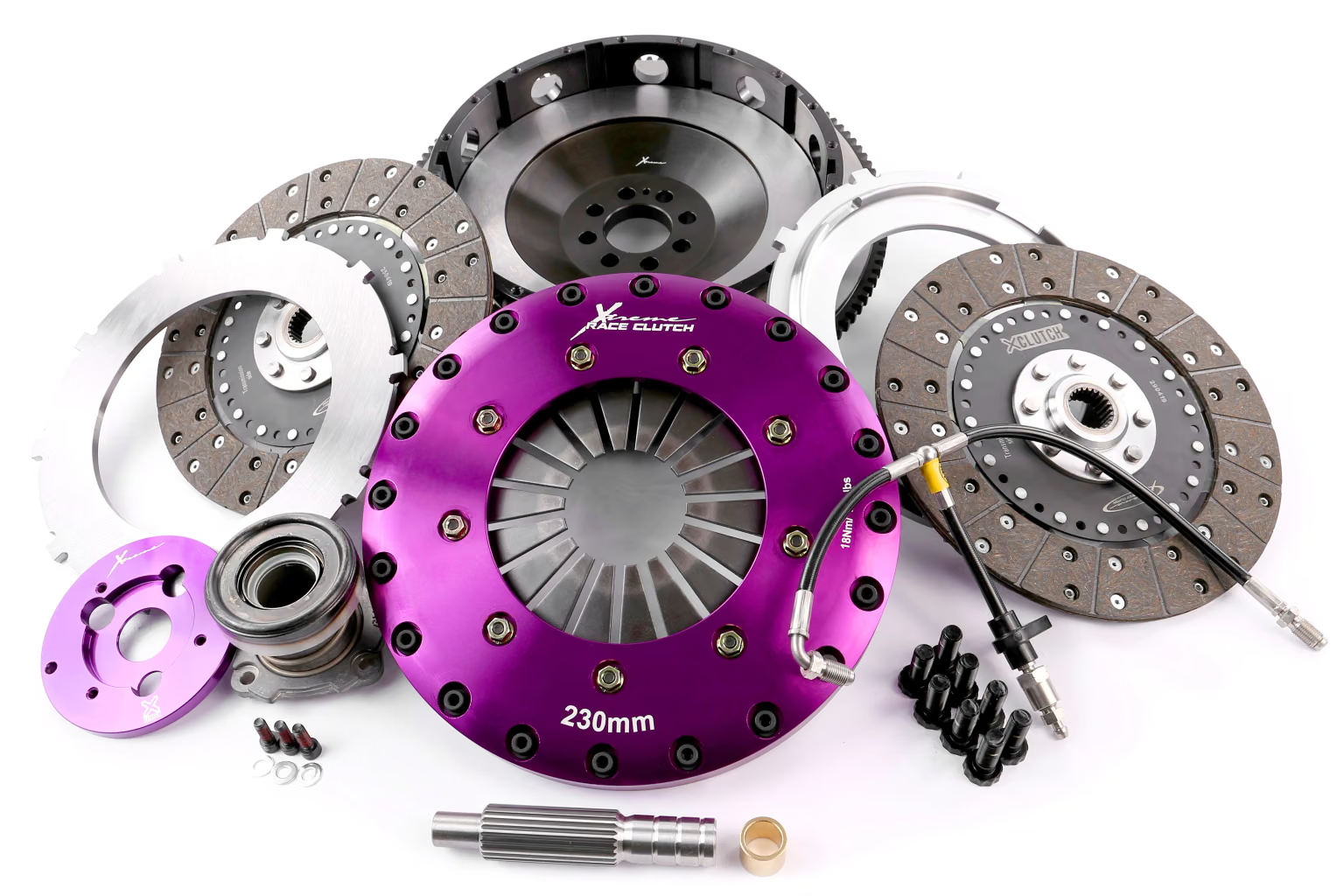
At the heart of the range is the clutch itself, available as single, twin, and triple plate configurations across a wide span of diameters (184mm through to 270mm), along with flywheels, service kits, and single-plate conversion kits for vehicles moving from a dual-mass to a solid-mass flywheel. For platforms that need a purpose-built solution, the range also includes dedicated clutch conversion kits for popular engine swaps and performance builds, covering BMW M50/S50/S54, GM V8 LS (6-bolt and 8-bolt LSA/LSX) and Small Block applications, Nissan RB20/25/26/30 and VR38DETT, and Toyota 1JZ/2JZ and 1UZ engines.
Supporting the clutch itself is a full line-up of the components that make installation and operation correct and reliable: concentric slave cylinders, metal alignment tools for accurately centring the clutch disc during fitment, and the individual parts that make up multiplate clutch assemblies, including covers, discs, intermediate plates, main castings, and the bolts that hold it all together. Rounding out the range are transmission filters to keep gearbox fluid clean, and wheel studs for a secure wheel-to-hub connection.
You'll find trusted names behind these parts, including Xtreme Clutch performance clutch kits and conversion kits, ARP fasteners and wheel studs, and RYCO transmission filters.
Drivetrain Maintenance
Regular attention to the drivetrain is one of those jobs that really shouldn't be put off — a failing clutch, worn driveshaft joint, or neglected gearbox can leave you stranded, and repairs tend to get considerably more expensive the longer a problem is ignored. One of the most important maintenance tasks is changing the transmission fluid and filter at the intervals set by the manufacturer, since old, contaminated fluid accelerates wear on gears, bearings, and synchros.
It's also worth keeping an eye on the clutch for signs of slipping or a change in pedal feel, and inspecting CV joint boots and universal joints for cracks or torn rubber, since a damaged boot lets grease escape and dirt in, quickly wearing out the joint underneath. Catching these issues early is generally far cheaper than waiting for a component to fail completely.
Summary
The drivetrain is one of those parts of a car that goes unnoticed day to day — until it starts to fail. Understanding the basics of how it works, along with regular inspection and timely fluid changes, is a simple way to make sure your car keeps putting power down reliably for years to come. If in doubt, it's always worth having a mechanic check your drivetrain — a small cost compared to what's at stake.
FAQ
What are the main parts of a drivetrain?
A typical drivetrain includes the clutch or torque converter, the gearbox, the driveshaft, the differential, and the axles or drive shafts that connect to the wheels. Depending on the vehicle, it may also include a transfer case for four-wheel drive or all-wheel drive systems.
What types of drivetrain layouts exist?
The most common layouts are front-wheel drive, rear-wheel drive, and all-wheel drive or four-wheel drive. Transmissions vary too, ranging from manual gearboxes to torque-converter automatics, dual-clutch transmissions, and continuously variable transmissions, each suited to different driving styles and vehicle types.
What should you look for when buying drivetrain parts?
First, check that the part in question — clutch kit, driveshaft joint, or filter — is correct for your specific make, model, and version; your owner's manual or a mechanic can help confirm this if you're unsure. It's also worth buying components from reputable manufacturers to avoid the risk of counterfeit or low-quality parts, and to make sure whatever you choose meets the required specifications for your vehicle.